
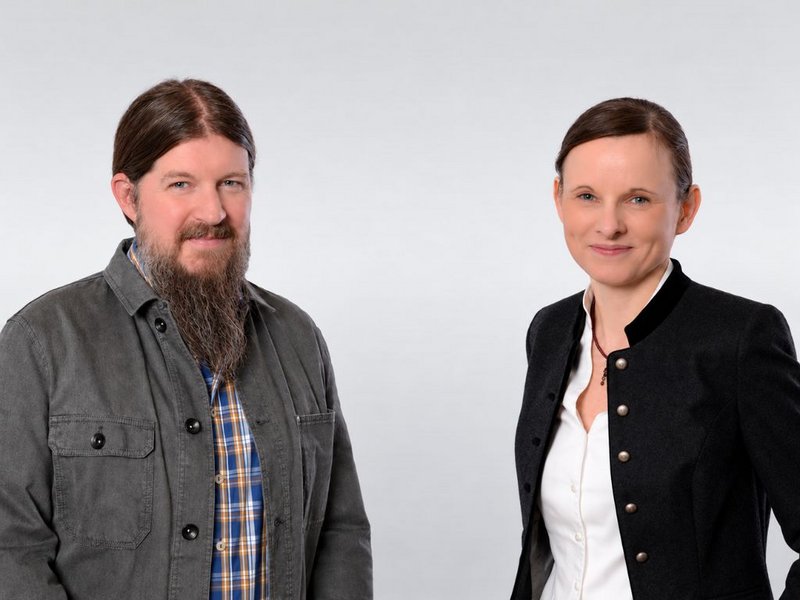
The list presented on TOPSCINET is based on a publicly accessible citation database compiled by Stanford researcher John P. A. Ioannidis and published in the Elsevier Data Repository. It draws on data from the scientific literature database Scopus. Alongside citation counts, the assessment considers additional indicators and researchers’ roles in co-authored publications. Inclusion highlights the extent to which their work is taken up by the scientific community – and therefore recognises their research impact.
Sandra Schlögl: Polymers with New Functions
Sandra Schlögl combines polymer chemistry and photochemistry with the development of materials for the future. One focus is on polymer networks that can be repaired, reshaped or recycled. Her work addresses a central challenge: How can high-performance, durable polymers also become better suited to a circular economy? Schlögl has worked at PCCL since 2006 and became its Scientific Director in November 2025. As an Assistant Professor at Montanuniversität Leoben, she also combines her research with academic teaching.
Gernot Oreski: Durable Materials for the Energy Transition
Gernot Oreski heads PCCL’s “Sustainable Polymer Solutions” division. His research focuses particularly on the ageing, reliability and service life of polymers. Photovoltaics is an important application area: Polymer materials used in this field must withstand demanding environmental conditions over many years. Oreski investigates the underlying ageing and failure mechanisms and works on the assessment and qualification of new materials. His research thus provides a foundation for longer-lasting and more reliable photovoltaic modules.
The inclusion of both researchers underlines the international visibility of polymer research at PCCL. The Leoben-based research centre connects scientific findings with specific industrial requirements. Together with companies, universities and research institutions, it develops solutions for sustainable material cycles, functional and reliable polymers, and the use of digital methods in polymer development. The aim is to translate new knowledge into applications that conserve resources and enable technological progress.